Speak Finance: Key Financial Terms for Decarbonisation Planning
Sustainability leads need CFO approval to fund their plans. Here's the financial vocabulary that helps you speak the CFO's language and close that gap.

Get instant access
Link
Understanding CFO Priorities
CFOs assess every line item in their budget competing for the same capital. This includes new production lines, warehouse expansions, software licences and human capital costs. Carbon management initiatives are prioritised according to their strategic importance, risk and opportunity assessments, and balance sheet impacts.
CFOs continuously focus on systems that improve data quality and forecasting for decision-making. Data intelligence helps them simplify the complexities of their role, which includes oversight of financial planning across all departments of an organisation.
A 2025 Gartner survey reveals CFOs’ top priorities in 2026.
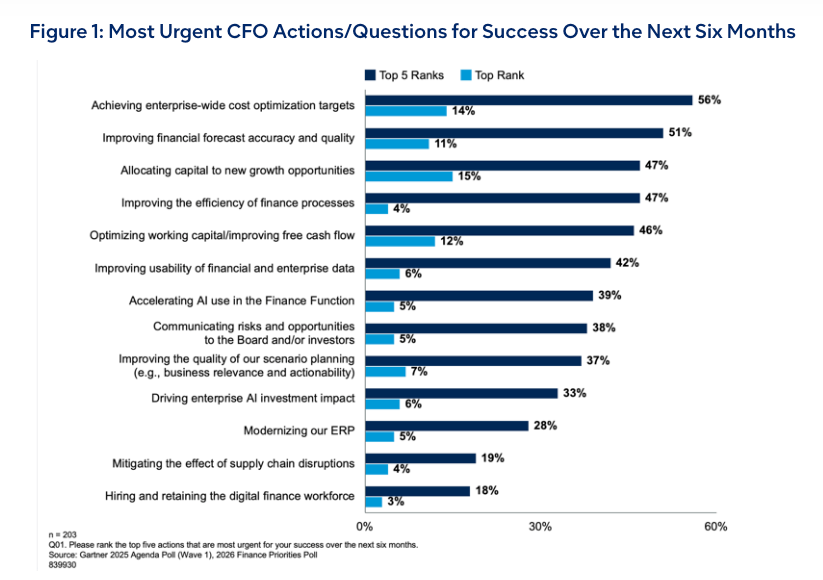
Compared to sustainability leaders, CFOs have a narrower focus on the financial rather than the environmental and social impacts of strategic initiatives. This does not mean the organisation's broader mission or risk management approach doesn't factor into their decisions, but they justify every decision using financial logic.
Speaking the language of finance
CFOs allocate capital in terms of ROI, payback and risk-adjusted returns, not emission factors or Scope 3 boundaries. Building the business case for decarbonisation is essential to helping CFOs perform their own role well when reviewing proposed initiatives.
It is helpful for sustainability leadership to present information to financial teams in financial terms. This doesn't mean minimising the CO2 significance or impact: sustainability managers can still present the information alongside estimated tonnes of CO2e emissions reductions. A critical difference is that supplying financial characteristics of plans or projects gives CFOs the information they need to more efficiently assess initiatives using their own criteria.
Key financial terms for decarbonisation
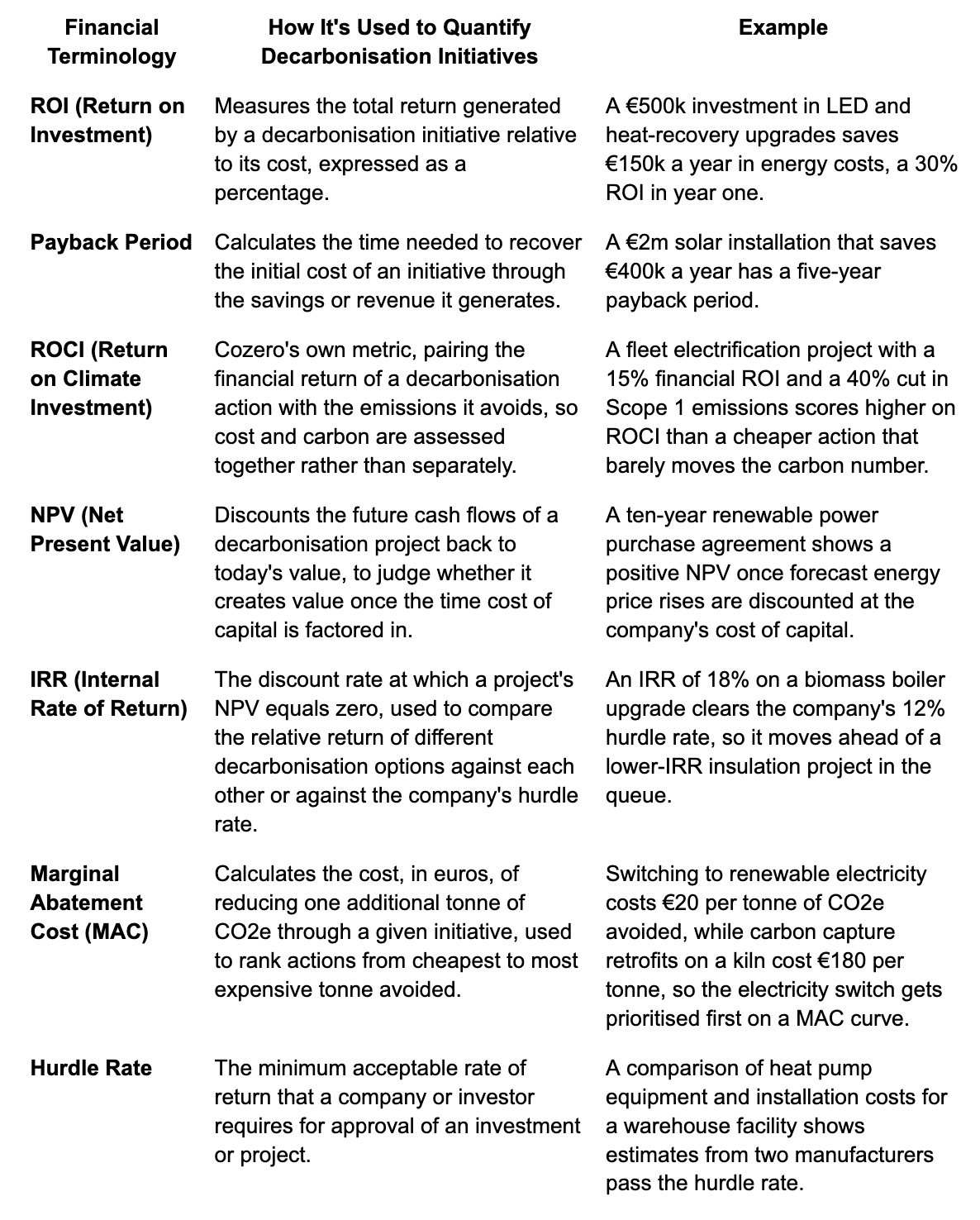
Once a Sustainability Lead can speak using project finance terms fluently, they can effectively embed decarbonisation into decision-making processes and gain approvals. This supports multiple areas of stronger cross-functional collaboration: carbon pricing, supplier selection, CapEx planning and M&A due diligence. Ultimately, this expands the strategic impact sustainability teams can make across an organisation.
Scenario comparisons for decarbonisation
Scenario comparisons allow sustainability teams a way to express multiple factors, including time, financial impact, and carbon emissions reduction potential in a clear visualisation to present to CFOs.
Within the financial analysis of decarbonisation strategies, both time and capital play a role alongside emissions. Decarbonisation decisions often carry long payback horizons and upfront capital costs. Finance teams are no stranger to this type of investment, as they handle similar cost curves for other categories of spend.
A Sustainability Lead who can present scenario comparisons showing which action clears the company's hurdle rate demonstrates financial feasibility from the start. The more you present information in terms of a normal capital allocation process, the higher your chances of gaining buy-in from your CFO.
Cozero's Act Module supports sustainability leaders with this process. Act attaches ROI and payback to emission reduction activity scenarios and visualises the financial data. This makes it easy to pitch the right project with a lower payback period, and demonstrate the relative advantages.
Companies rarely have unlimited capital for decarbonisation in a single budget cycle, so the real question isn't "what could we do" but "what should we do first." With Act, a Sustainability Lead can walk into a budget conversation with a shortlist of initiatives tested against payback thresholds and ROI expectations.
Financing mechanisms for carbon reduction
While a CFO's itemised budgeting for specific projects may seem like the shortest available route to funding, it is important to consider all available alternatives. Most companies stack several mechanisms depending on the size and risk profile of the project. Here are some examples:
- Sustainability-linked loans: Interest rates that fall if ESG targets are met, rise if they're missed.
- Green bonds: Debt issued for environmental projects, with proceeds ring-fenced and audited separately.
- Green loans and CapEx financing: Term loans for a specific asset, like a fleet or retrofit, often shaped by its payback period.
- Power Purchase Agreements (PPAs): Long-term renewable energy contracts, often with no upfront capital, which is why they usually top a MAC curve.
- Public grants and subsidies: Programmes like Germany's KfW that co-fund efficiency or electrification upgrades, lowering the capital required.
- Green leasing: Leasing lower-carbon equipment instead of buying it, keeping the cost off the capital budget.
- Internal carbon pricing: An internally defined price on emissions that strengthens the case for external financing by making future carbon costs visible.
By including different preferred or available options for financing decarbonisation initiatives when presenting projects to a CFO, you can achieve a higher chance of buy-in. Whenever a package of financing strategies is available, it gives CFOs more financial flexibility.
Making carbon finance visible with Cozero
Cozero is a carbon management suite used to simplify the time it takes to quickly assess and prioritise initiatives in terms of both carbon emissions and financial impacts. Sustainability leaders can use it to show which projects meet CFO criteria. CFOs also benefit from the streamlined ability to quickly assess projects in ways that can integrate more easily into their assessment processes.
Discover how our Carbon Action Platform makes decarbonisation plans easier to assess in terms of financial decision-making criteria.

Related articles
Connecting Carbon Emissions and Financial Statements using IFRS Accounting Standards
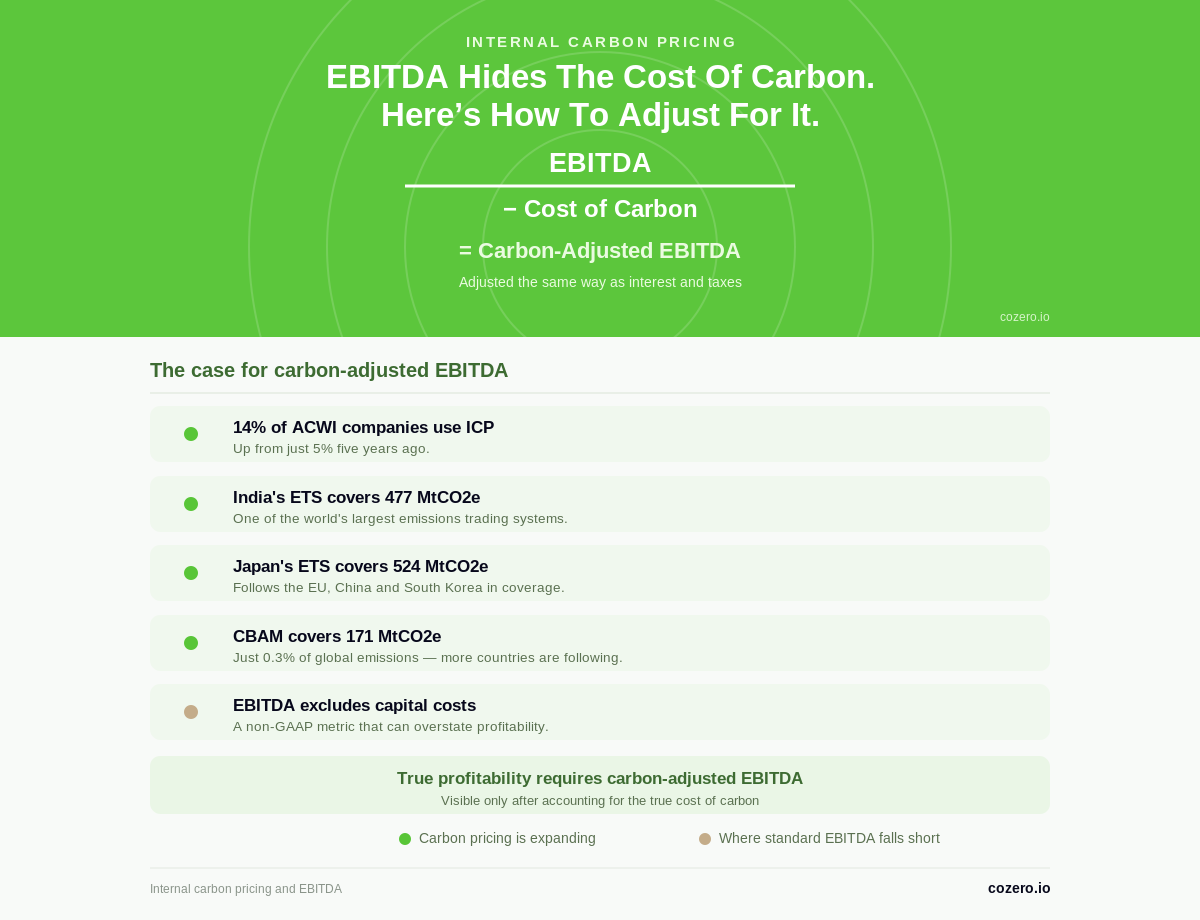
Internal Carbon Pricing: A Practical Path to Carbon-Adjusted EBITDA