

Carbon controlling for transport and logistics.
EU ETS Maritime, FuelEU Maritime, CSRD, and customer carbon reporting requirements are converging on the same question: what are your emissions, and can you prove it? Cozero gives transport and logistics companies the carbon controlling system to answer that question and manage the financial exposure behind it.


Trusted by finance and sustainability teams at logistics enterprises across Europe.
.png)


The tools transport and logistics companies need to control carbon, not just report it.
We enable sustainability and operations professionals in logistics to manage emission data, improve carbon footprint reporting, decarbonize their transport and supply chains, and comply with regulatory requirements.
Build the emissions data foundation: across modes, entities, and supply chain.
Detailed emission calculations for logistics activities

Methodology your auditors and customers can verify.
Standardized and transparent methodology

Collect and share carbon data: across your organization and your customer base.
Intuitive and automated sharing capabilities

Prioritize decarbonization investments: with the financial metrics to justify them.
Climate action and cost reduction


Sector-specific depth across transport and logistics.
Transport companies
Manage Scope 1 and 2 emissions from fleet operations across road, rail, sea, and air. Calculate transport carbon footprints per shipment or route: increasingly required by customers as a tendering condition. Quantify EU ETS Maritime and FuelEU Maritime exposure and model the ROI of fleet transition investments.
Freight forwarders and shippers
Calculate and report the carbon footprint of goods transportation across multimodal supply chains. Produce ISO 14083 and GLEC 3.0 compliant reports for customers who require carrier emissions data. Manage Scope 3 supplier carbon data as customer carbon requirements become standard procurement conditions.
Infrastructure and ports
Measure and manage the carbon footprint of transportation hubs, depots, ports, and warehouses. Centralize Scope 1 and 2 data from energy consumption, fuel use, and operations across locations. Meet CSRD and regulatory disclosure requirements with auditable, structured data.
Logistics services
Whether warehousing, distribution, or fulfillment: accurately account for emissions across your entire logistics operation. Track Scope 1, 2, and 3 data at the entity and location level. Build the reporting foundation that CSRD and customer sustainability requirements demand.
Olaf Zimmlinghaus


Achieving our sustainability goals to combat climate change holds a special place within the NX Group. Our well-defined sustainability goals are not only deeply embedded in our operations but also subject to continuous monitoring of success. The data-driven solution provided by Cozero enables us to implement sustainability transformation into our corporate planning.
Christian Grosse


With Cozero’s technology we can provide our customers with detailed information on their emissions on every step and component of their international parcels' journey. This will help them to make smart choices and significantly reduce their GHG footprint.
Deutscher Nachhaltigkeitspreis


What is remarkable is the high quality and transparency of the emission data, which can be managed in a simple and comprehensible way, thus facilitating decisions for the future. Alongside digitization, climate protection is one of the major transformation challenges of our time that all companies will have to face sooner or later. There is no question that this can only work in tune with economic success.
Dominique Breuer


We don't just want to understand what OMR's carbon footprint is. We want to work specifically on reducing our emissions significantly. This year we laid the foundation by creating as much transparency as possible.
Lutz Fricke


At MOSOLF, we are transforming our business model by “measuring, improving and talking”. The basis of every improvement is reliable measurement. With Cozero we work very closely on the constant development of our carbon footprint. Long-term and trusting cooperation is important to me personally. Because this is the only way we can improve sustainably. In this sense, Cozero is exactly the partner for us.

Import emissions files
Import your existing files with emissions calculations.

... or activity data
Alternatively, directly fill out a template with activity data.

... to get you reports
Access comprehensive reports of emissions.
Frequently Asked Questions
Cozero's software provides user-friendly analytics tools. Users can access intuitive dashboards, charts, and graphs that present carbon emission and reduction trends in a clear and understandable format.
Yes, Cozero's logistics solution enables transportation companies to calculate and comprehensively report their Scope 3 emissions. The platform facilitates the collection of primary supplier data through easy and secure data-sharing mechanisms.
Absolutely. Our software is designed to keep you compliant with evolving environmental regulations. We provide timely updates and automate data collection and reporting processes to ensure your submissions meet the emissions disclosure requirements related to the SCA and CSRD.
Cozero offers comprehensive support and training to assist transportation professionals in implementing and using the software effectively. Our climate success team provides training sessions, documentation, and ongoing support to ensure users are equipped with the knowledge and resources needed to maximize the benefits of the Cozero platform.
Yes, Cozero's platform is equipped with a decarbonization strategy planning tool to assist transportation companies in building emissions pathways, setting multi-level reduction targets, and assessing the impact of various decarbonization initiatives.
Yes, Cozero's software has an API designed for seamless integration with your TMS, WMS, or ERP systems. The interoperability with industry-standard management systems streamlines the integration process.
Absolutely. Cozero's software is designed to be flexible. It allows transportation companies to input and utilize supplier-specific emission factors for precise and customized carbon calculations.
We employ advanced algorithms and industry-specific data to accurately measure the footprint associated with road, air, sea, inland waterways, logistics sites, and rail transportation. In particular, we integrate EcoTransIT World’s scientific transport chains emission calculation methodology.
Recommended resources
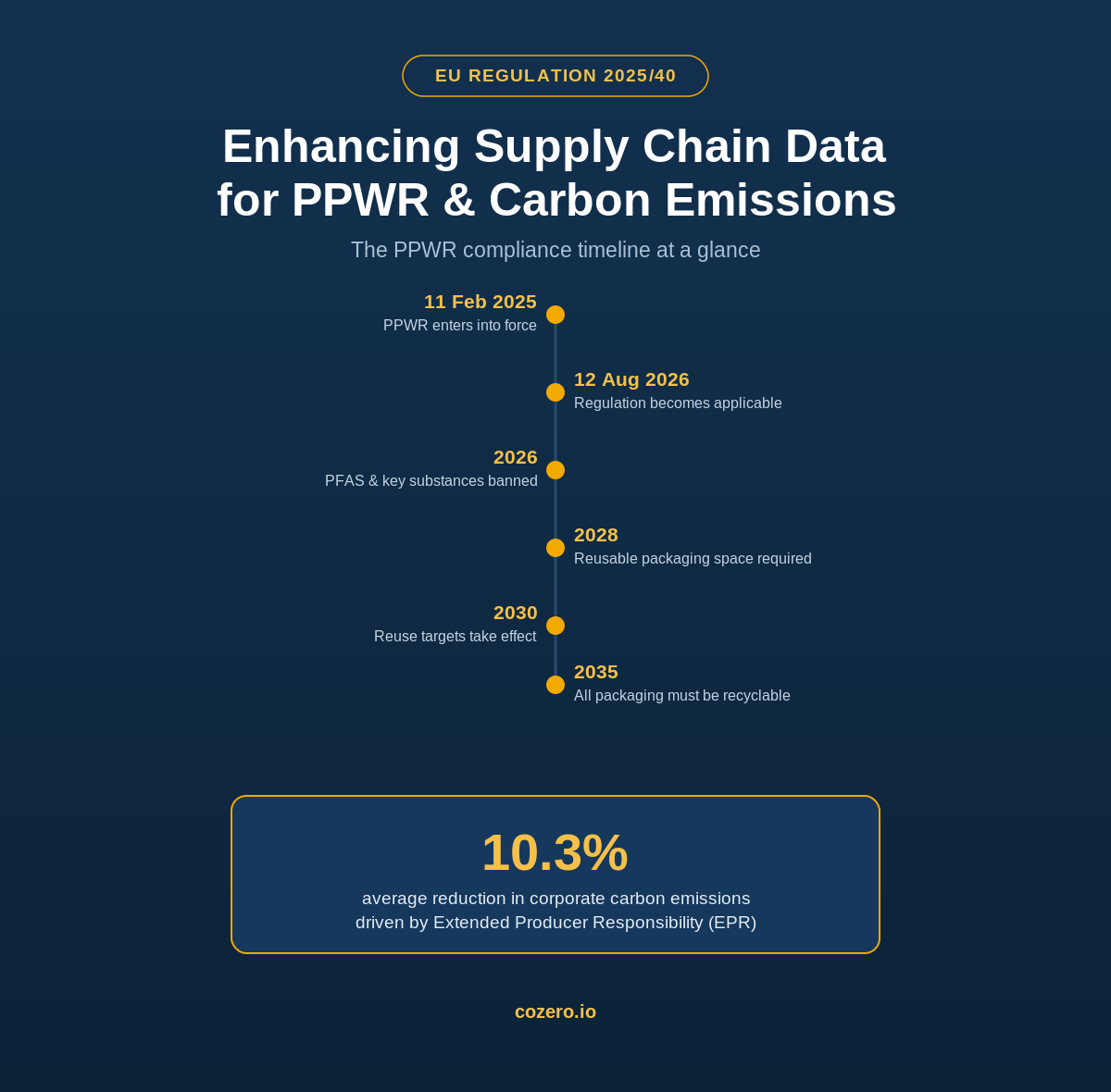
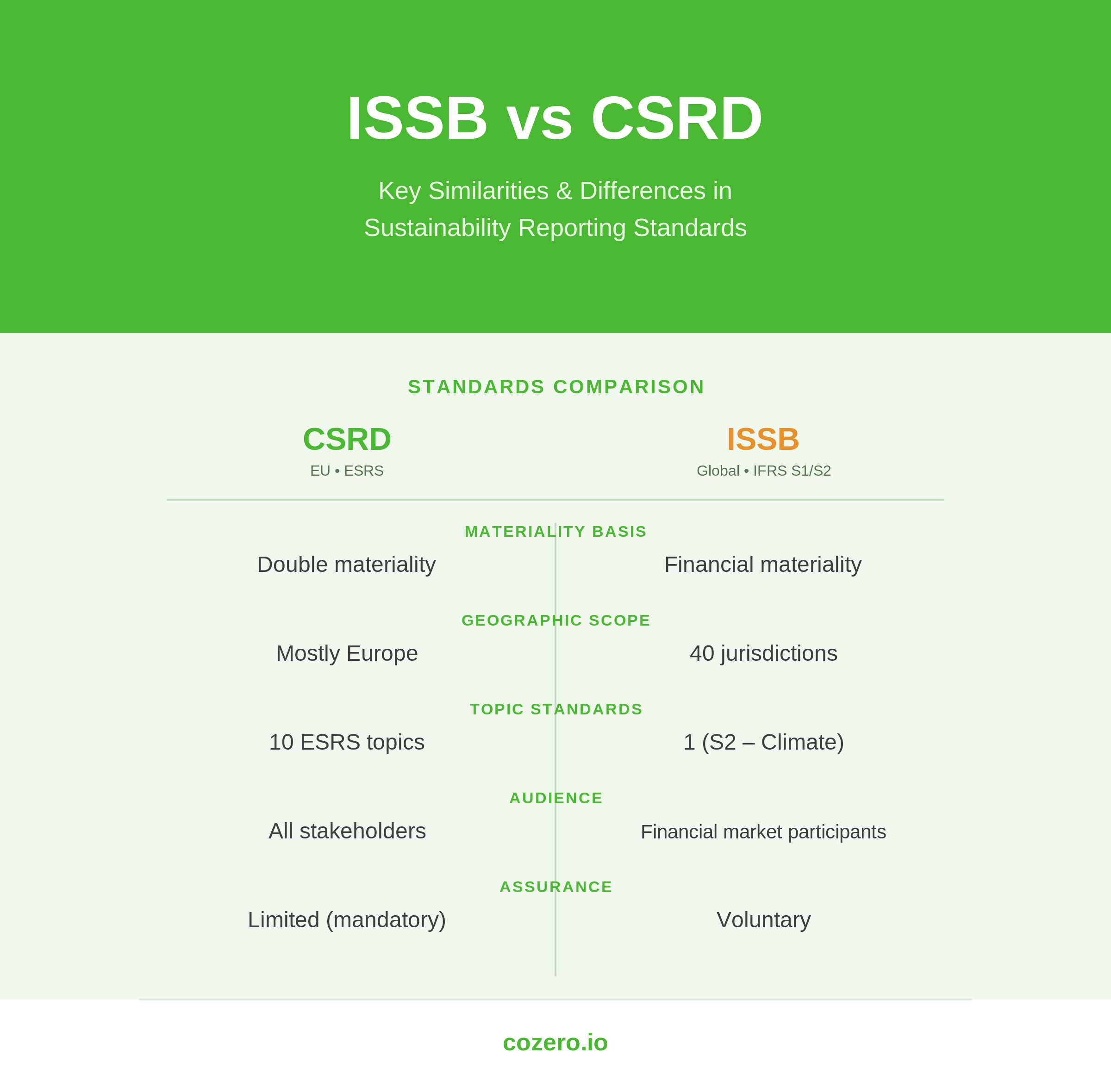
Regulations
Key similarities and differences between the ISSB and CSRD sustainability reporting standards
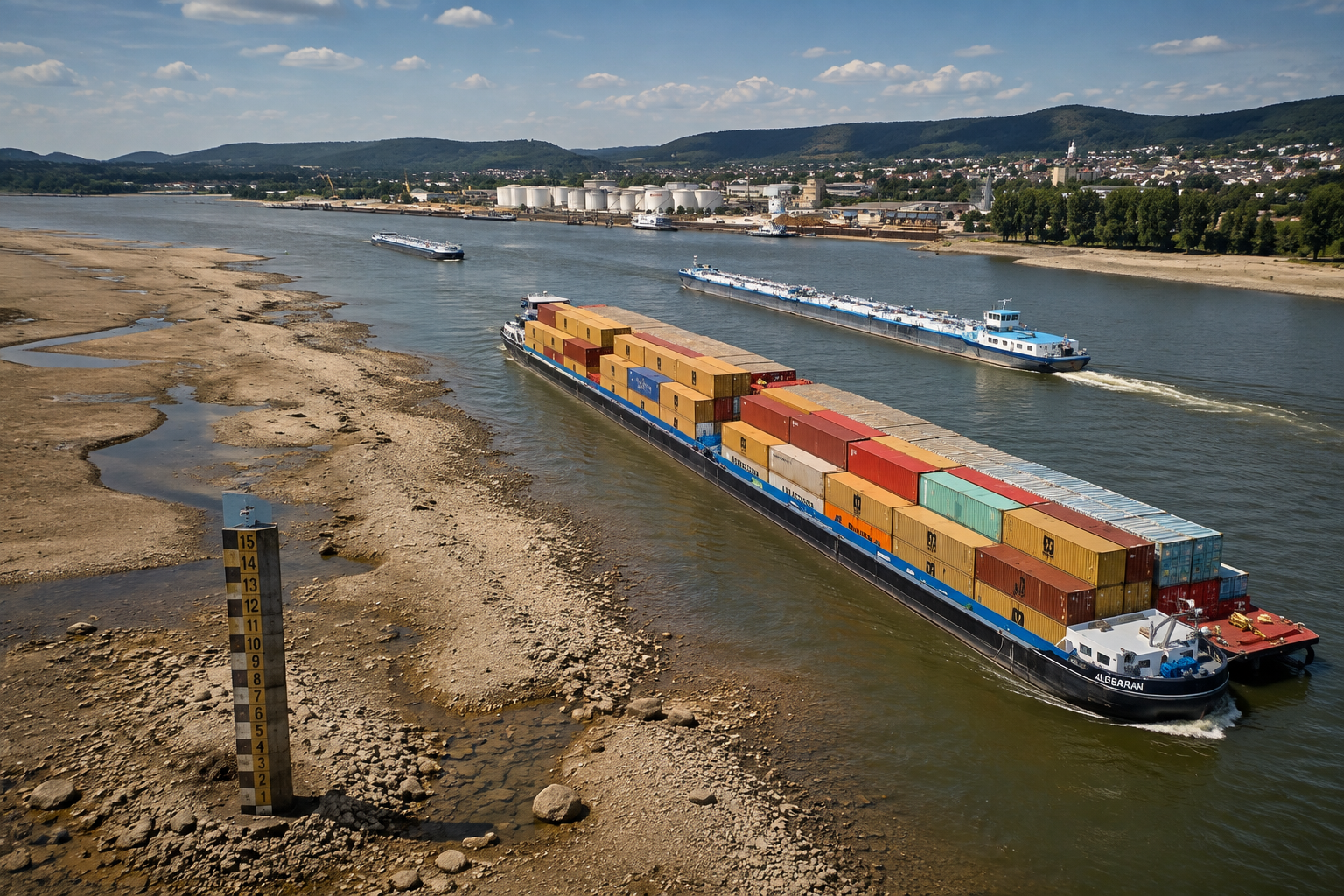
Put a business case behind every reduction measure.
Talk to our team about building a costed transition plan and a forecast that prices in carbon risk.
