Carrots and Sticks: How the EU ETS Review and Electrification Action Plan complement each other
Die EU-ETS-Reform und der neue Electrification Action Plan wirken zusammen: Anreize und Sanktionen sollen Unternehmensemissionen spürbar senken.

Get instant access
Link
Softening sticks: The ETS Review eases the credit reduction rate
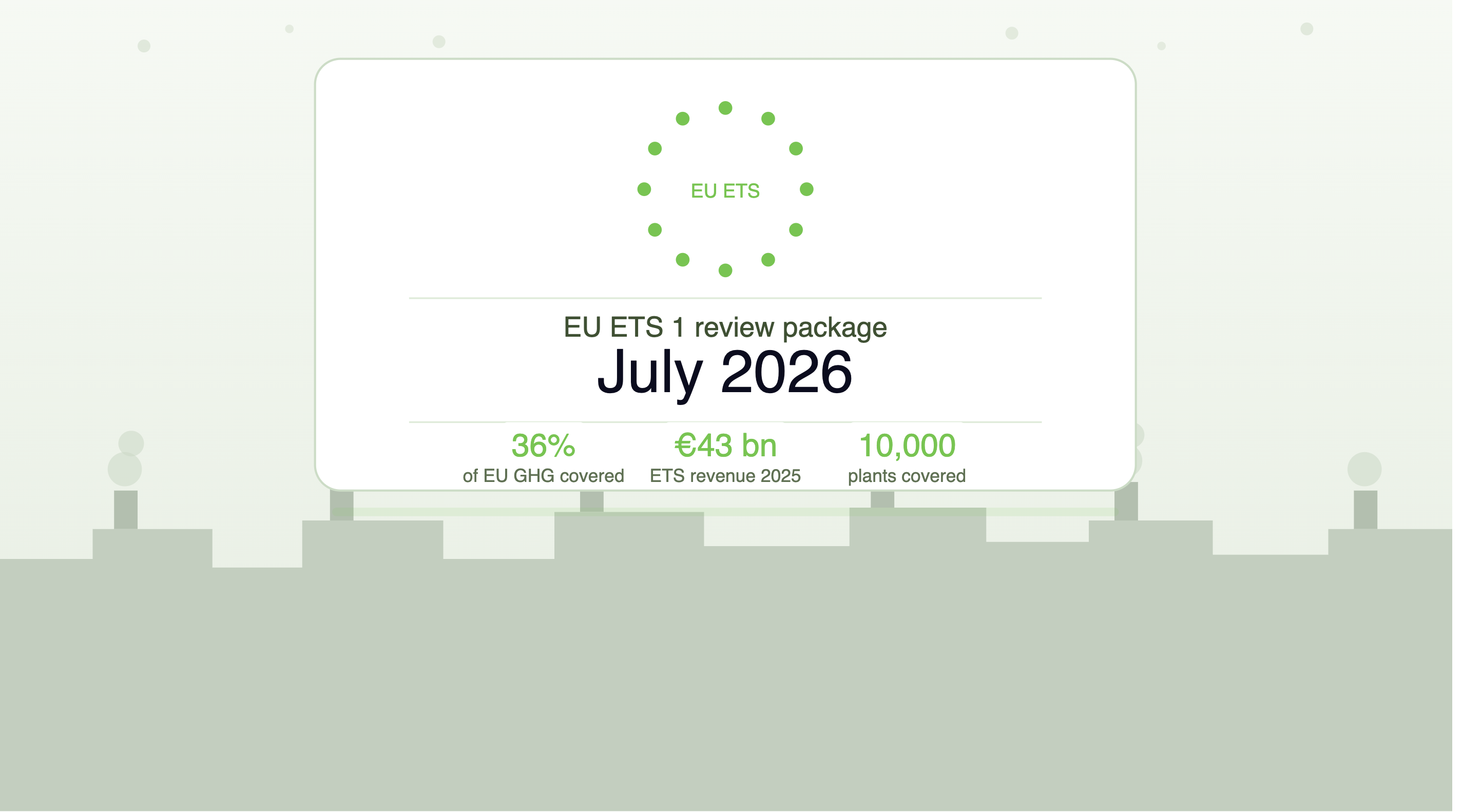
The ETS Review sets the agenda for the rate of carbon credit allocation through 2040. The linear reduction rate will fall to 3.7% per year between 2031 and 2035, then 1.7% per year between 2036 and 2040 down from the current 4.3% annual pace. This choice from the ETS aligns with calls from German industry and other participating sectors to ease the burdens on cost attributed to the carbon pricing scheme.
The approach significantly slows the rate at which carbon credits available for purchase are reduced. The main principle behind the ETS is to incentivise companies in covered sectors, which include industry, aviation, transportation and now waste incineration, to decarbonise by penalising them with fines if they fail to do so.
For covered businesses in the system, they have free allowances to cover their annual emissions. If they cannot cover all of them, they must purchase carbon credits at a market rate. If they still do not cover their annual emissions, the EU imposes heavy fines. Ultimately this approach centers on punitive action, or policy “sticks”, to motivate companies to reduce their emissions. However, the ETS Review also made adjustments by improving funding opportunities and extending the phase-out of free allowance credits.
Free allowances continue beyond 2030: Free emission allowances for industry will continue beyond 2030 but will be tied more closely to investments in decarbonisation, a design intended to prevent carbon leakage, reflecting the Commission's position that "contributions from industry should go back to industry. Member states must spend half their national ETS revenue on decarbonising ETS sectors.”
Carbon removals enter the system. The review examines integrating certified permanent carbon removals into the ETS, alongside the use of international carbon credits, while the Commission has stressed that removals must complement, not replace, actual emissions reductions.
A bigger funding push. The Commission is channelling ETS revenues more efficiently through the Industrial Decarbonisation Fund and Innovation Fund. First movers get access to an estimated €30 billion through a new ETS Investment Booster.
New sectors and expanded coverage. Municipal waste incineration is being brought into scope, aviation coverage is expanding, and shipping coverage extends to smaller vessels.
Next steps. As a legislative proposal, the review now heads to the European Parliament and Council for approval, meaning MEPs and Member States could either confirm or negotiate the ETS Review outcome.
Chasing carrots: The Electrification Action Plan
The main focus of the Electrification Action Plan is accelerating ambition by removing roadblocks and setting ambitious targets. It sparks more ambition that could benefit not only the EU's decarbonisation, but also improve its electricity affordability, grid resilience, and energy security.
It sets an ambition target to increase the rate of electrification from today's 23% of energy use to 46% by 2040 with the Commission aiming to make Europe the world's first "electro-powered" continent. Reaching that target means electrifying businesses nine times faster, and it could cut the EU's fossil fuel import bill by an estimated €260 billion a year once achieved.
The plan isn't just a target-setting exercise. It combines financial incentives, infrastructure investment, regulatory reform, and skills development to address the barriers that have slowed adoption of electric technologies. It covers electrification across buildings, industry and transport and eases electricity prices by adjusting tax rates to close the cost gap between electricity and fossil fuels. Member states now have more room to ease network charges and taxes for consumer groups and high-energy businesses to prevent price shocks.
Additional details will be arranged through supplementary packages as part of the overarching Plan. Phasing out fossil fuel subsidies is part of the Commission's Post-2030 Energy Union Package, and grid interconnection challenges are addressed in another Grids Package expected later this year.
Multinational companies already weighed in
The Plan appears to directly respond to a public call for electrification issued on 22 July 2026 by multinational corporations IKEA, Unilever, and Siemens. In a letter, these businesses and several organisations call for governments to prioritise electrification in their industrial strategies. It focuses on the challenges for businesses as fossil fuels drive higher costs and more price volatility. To reduce this burden, the companies seek clearer and more predictable government policies focused on improving electricity markets, investing in grid infrastructure, and making permitting processes faster.
The almost immediate response by the EU Commission in releasing the Electrification Action Plan shows possible sensitivity to this letter. However, it is worth noting that the plan had already been included as part of the EU's Climate Work Plan for 2026.
How electrification links to the success of the ETS
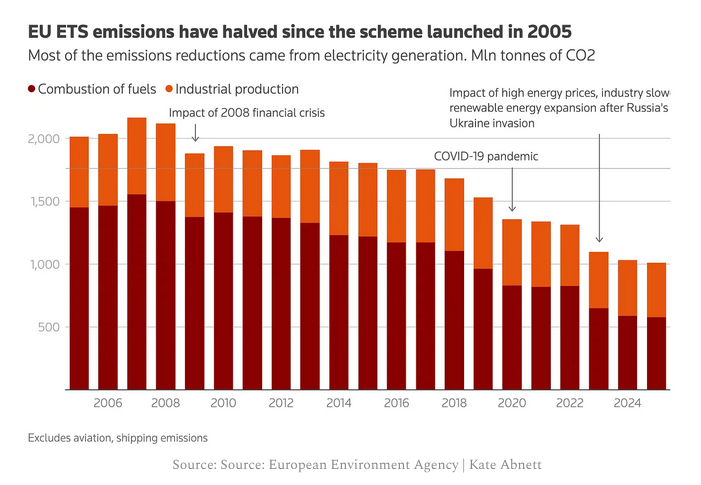
While the two policies on the surface look separate, it is helpful to recognise how closely they actually connect. Since 2005, the ETS has proven largely successful as a policy mechanism that led to decarbonisation, halving the ETS emissions of covered industries since 2005.
The European Environment Agency suggests that for industry, the majority of these reductions were the result of electrification by switching from fossil fuel combustion. Therefore while decarbonisation is the end goal, electrification may be the key driver.
The revenues from the ETS system have reached €270 billion since 2005. These funds were directly reinvested in innovation, industrial decarbonisation and the modernisation of the energy system. This shows that the ETS is and will continue to be a powerful mechanism for achieving its stated purpose: decarbonisation.
Releasing both policies at once signals that the EU is pulling multiple levers toward compatible outcomes simultaneously, rather than relying on a single mechanism. For businesses, the takeaway is similar: decarbonisation strategy works best when it's tied to core business interests like cost, competitiveness and resilience.
Cozero's perspective
These policies show what we've known since the start: decarbonisation works best with financial incentives when it brings core business value.
The interesting link between electrification and decarbonisation can serve as a guidepost for company strategies. The strategic focus on identifying “win-win” solutions for decarbonisation shows that climate strategy and business strategy continue to converge for businesses.
The companies that treat decarbonisation as a lever for cost control, energy security and competitiveness, rather than a compliance exercise, will be the ones best positioned to benefit from the regulatory landscape and the incentives it provides.
Carbon controlling brings the financial lens and carbon management together. We're helping companies make this strategic shift.
See how our platform works.
Related articles
Connecting Carbon Emissions and Financial Statements using IFRS Accounting Standards
Internal Carbon Pricing: A Practical Path to Carbon-Adjusted EBITDA