Enhancing Supply Chain Data for both PPWR and Carbon Emissions
PPWR is a new regulation requiring companies to disclose information about their packaging materials, and it introduces targets for increasing the circularity of packaging. As reporting requirements related to supply chains increase, companies are challenged to build data management systems that fulfill their data collection requirements. Companies can use similar supplier data collection strategies across sustainability issues to streamline their requests.

Get instant access
Link
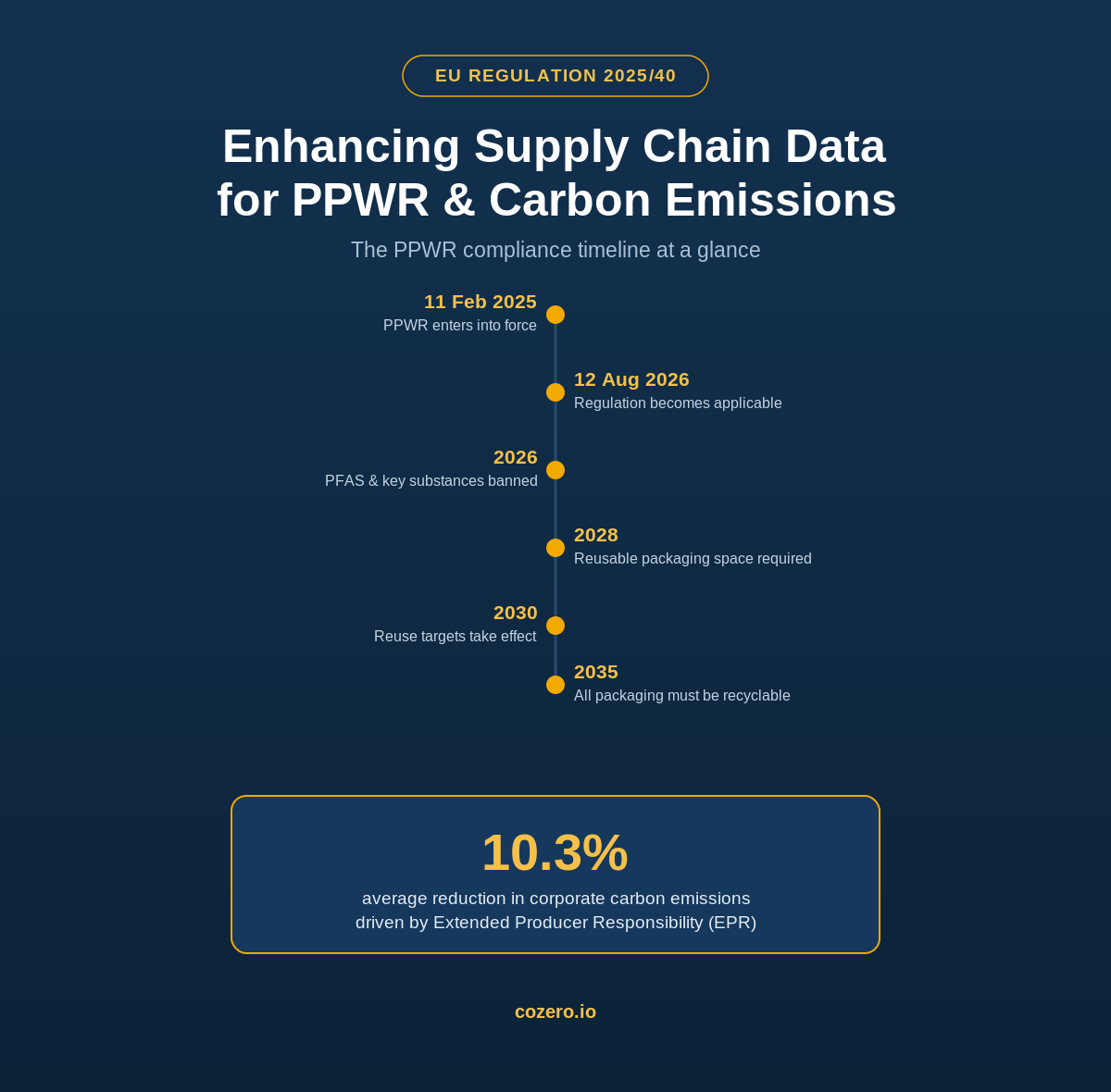
EU companies are managing an increasing number of reporting requirements for their supply chain sustainability data. One of the newest requirements is the EU Regulation 2025/40 on packaging and packaging waste (PPWR), which entered into force on 11 February 2025 and started applying on 12 August 2026. Working with suppliers to support sustainability disclosure requirements requires ongoing collaboration.
The PPWR specifically relates to reporting on the composition and circularity factors for packaging materials. The regulation doesn't directly require companies to collect packaging data that could support their Scope 3 emissions disclosures or product carbon footprint. Therefore, companies should consider their full sustainability reporting requirements as they prepare supplier information requests. Companies can build similar processes for PPWR and Scope 3 emissions data collection, both of which require active engagement with suppliers.
What is the PPWR?
PPWR requires producers to label their packaging products, and purchasers of the packaging materials to issue legally binding disclosures of their packaging materials. The regulation aims to support the prevention of unnecessary packaging waste, promote the EU's circular economy through reuse, refilling and recycling, and harmonise guidelines across the EU.
Key PPWR dates:
- Entered into force on 11 February 2025
- Applicable as of 12 August 2026
The regulation covers all types of packaging (glass, paper, plastic, etc.) from all countries of origin. Importers of packaging need to file and keep records of packaging information that cover both design and sustainability features:
- Recyclability grade: All packaging must be designed for recycling by 2035.
- Recycled content: Plastic packaging must contain minimum post-consumer waste, with key exceptions.
- Lightweighting: Packaging should not add any excess volume or weight without functional purpose.
- Reusability: Packaging should support reuse cycles while meeting safety standards according to reuse targets that begin in 2030. Retailers and restaurants and cafes need to dedicate space for filling reusable containers or offering reusable packaging by 2028.
- Substance restrictions: Key substances like PFAS are banned in 2026.
This information is submitted in a Declaration of Conformity (DoC) for all materials by type, supplier, and design. Any change to these details necessitates a new DoC. All DoCs submitted are legally binding and the signatory bears personal responsibility.
The regulation applies differently for different groups.
- Producers: Bear extended producer responsibility (EPR) for the full lifecycle of their packaging products, covering collection/sorting/recycling costs, with fee structures that incentivize eco-design. Research shows that EPR can have a significant impact on carbon emissions. On average, EPR reduces corporate carbon emissions by 10.3% and leads to greater performance improvements over time.
- Manufacturers/importers: Required to conduct conformity assessments, keep technical documentation (5 years, or 10 for reusable packaging), issue EU declarations of conformity, and take corrective action on non-compliance.
- Suppliers, distributors, fulfilment providers, and waste management operators: Each have supporting compliance and reporting duties.
- Member States: Must cut per-capita packaging waste with targets starting in 2035, build adequate recycling infrastructure, hit recycling rate targets rising to 70% by 2030, and establish deposit-return systems for single-use plastic/metal beverage containers by 2029.
Managing the sustainability data ecosystem
Companies need strategies for managing the higher rates of data collection in traceable formats to comply with these regulations. Strong data governance is becoming more important as sustainability requirements step up. In every case, key data management principles make the data collection, tracking, and monitoring process easier:
- Traceable data audit trails for assurance or other third-party verification.
- Data ownership and governance structures.
- Data quality controls.
- Automation to streamline data collection and reporting.
- Strong supplier engagement to support data collection and reporting.
The PPWR is just one example of multiple supplier data requirements brought by EU sustainability-focused regulations. There are key differences in the type and purpose of data collected from suppliers. Other regulations that require companies to report supplier information include CSRD, EUDR, CBAM, and EUDR.
Table 1: EU regulations with supply chain disclosure requirements
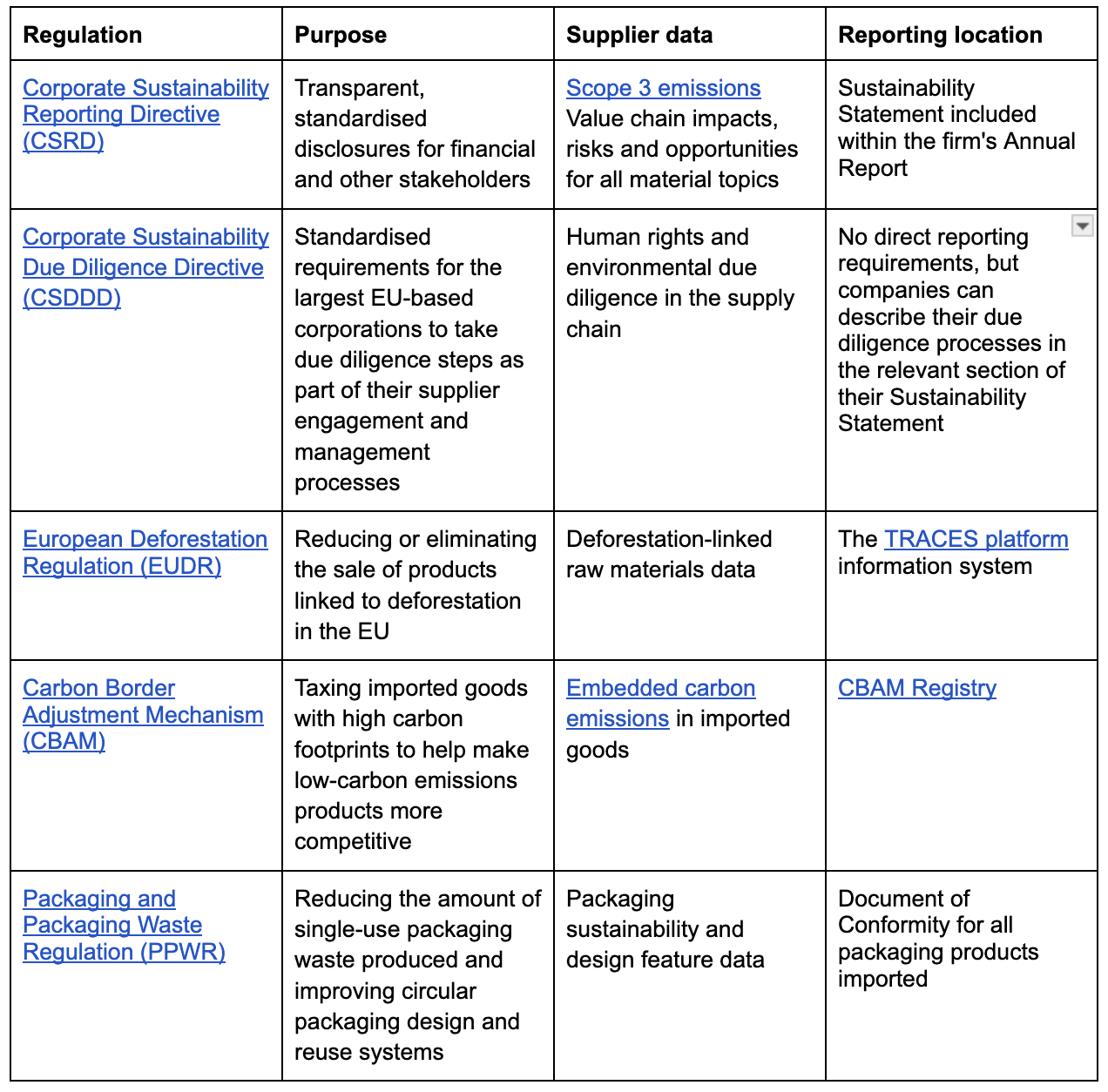
While the goals and reported data of each regulatory requirement differ, companies can still apply similar data collection approaches to fulfill multiple reporting obligations at once. Questionnaires for suppliers can include data across every relevant regulation at the same time. Providing gated access to data management software directly to suppliers helps to reduce the number of times data is entered.
How Circularity can Reduce Scope 3 Carbon Emissions and Product Carbon Footprints
As companies collect more data on the recyclability of their packaging materials, their purchasing decisions can lower their Scope 3 emissions and product carbon footprint (PCF). Tracking and monitoring the impact PPWR has on carbon emissions can help companies gain insights into using circularity as a deliberate part of their carbon management strategy.
This is why it is important to think about not only the packaging material requirements for PPWR, but also data that could help them drive carbon emissions performance improvements.
Suppliers who supply information on the recyclability of their packaging products can enhance their data by providing complete sustainability information in an Environmental Product Declaration and Digital Product Passport. As suppliers increase their packaging and material circularity data, companies can align multiple sustainability strategies from waste management to carbon management at once.
The Cozero platform is designed to mold to customers’ data requirements with customisable fields for additional information. Suppliers can access the platform as users to directly input their data. For platform customers who wish to utilise our experts to build beyond existing platform capabilities, we offer co-creation opportunities.
Get in touch to learn more.
Related articles
Connecting Carbon Emissions and Financial Statements using IFRS Accounting Standards
Internal Carbon Pricing: A Practical Path to Carbon-Adjusted EBITDA