How Companies Manage Physical and Transition Climate Risks
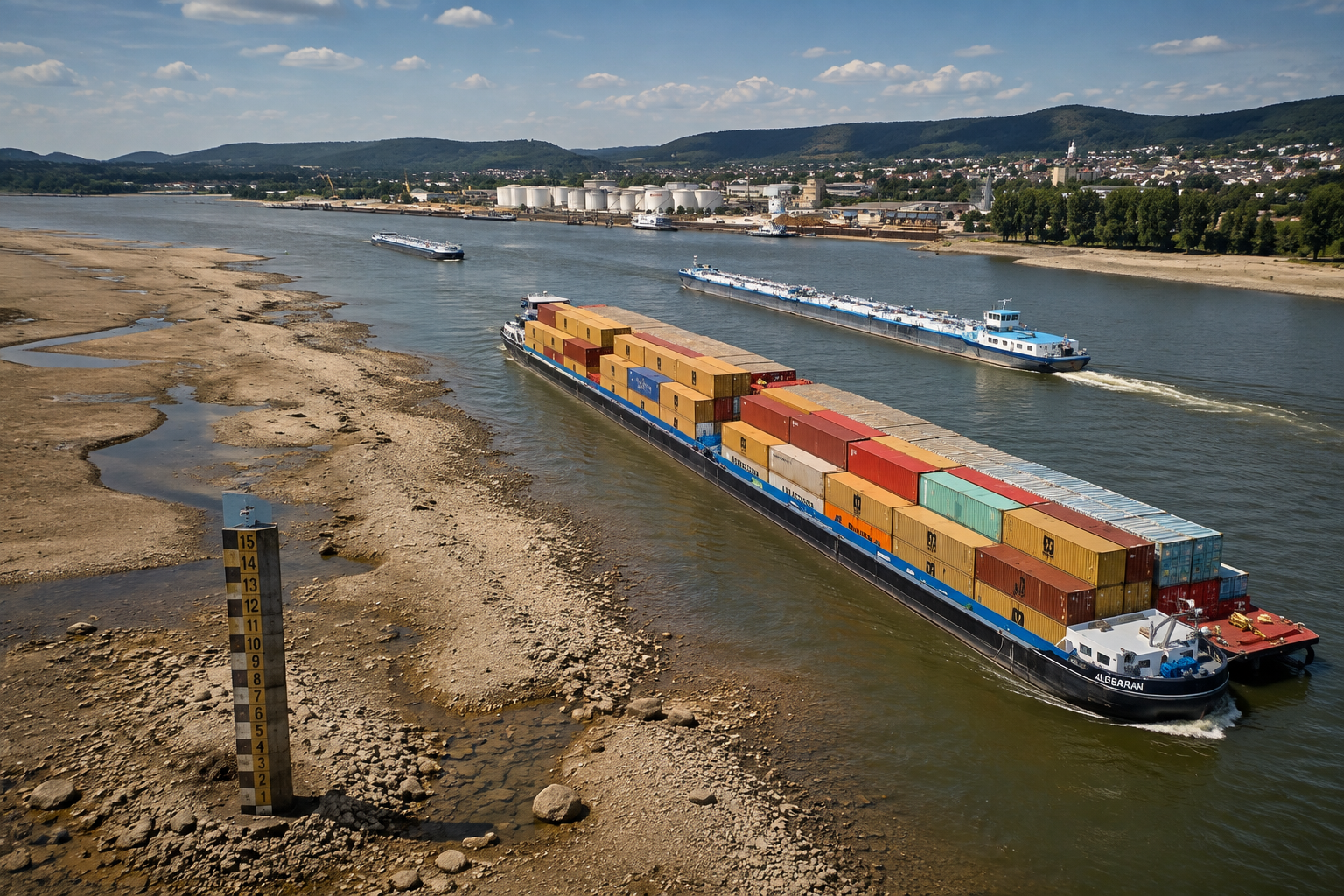
Der Klimawandel trifft bereits jetzt die Industrie: Rekordniedrige Rheinpegel senken die Frachtkapazität und wirken sich auf Schifffahrt und Logistik aus.

Get instant access
Link
A low water summit convened in Bonn with Germany's Federal Minister of Transport proposed shifting shipments to rail and road, while municipal water rationing risks further industrial losses. Estimated production losses already total around €913 million from water shortage.
These impacts may seem temporary, but they'll keep coming each year if we don't collectively act. Every tonne of GHG emissions counts at the system-wide scale. Every company plays a role in the climate transition.
Estimates place the current annual climate-related losses at roughly USD 38 trillion (PIK). If global leaders decide to take urgent action to transition to net zero by 2050, global GDP would be 7 percent higher than a business-as-usual trajectory (IMF).
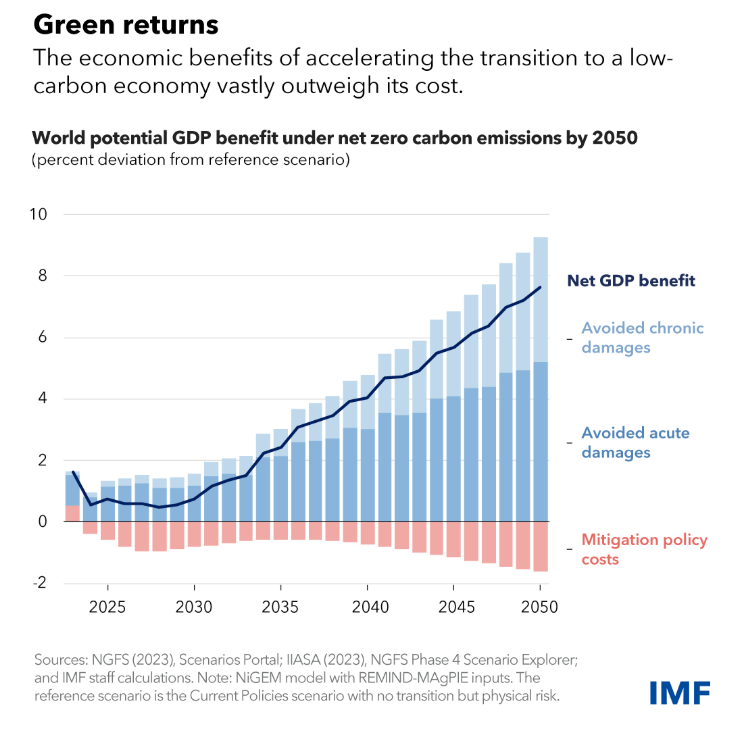
Companies and financial institutions around the world are evaluating climate risks to improve their climate resilience and plan their climate strategies today.
How do companies evaluate climate risks?
Climate risks are financial risks. They're not separate from classic risk management, which is a forward-looking approach to estimating potential negative or positive financial impacts and defining strategies to address them. Through risk management, companies can strategically plan amidst uncertain future scenarios to avoid unnecessary risks and prepare for stronger financial performance.
At the firm level, companies use climate risk assessments, which are often reinforced by climate scenario analysis. Climate risk assessments include the identification, evaluation and prioritisation of material financial risks. They help businesses make important strategic decisions about how fast, when, where and why to decarbonise their operations and value chains. They can also lead to strategies for climate resilience and adaptation, to manage unavoidable risks.
There are two main types of climate-related risks that companies need to assess: physical and transition risks.
- Physical risks are the financial risks arising from exposure to direct, climate-related geophysical hazards like floods, wildfires, drought, sea level rise or extreme temperatures. Drought and low water levels in the Rhine are a perfect example.
- Transition risks are from policy, technology, consumer, market and legal changes related to climate change. They also migrate into balance sheets: for example, when carbon prices step up. They are also more likely to present opportunities such as demand for sustainable products.
Bottom line: Companies need to adopt forward-looking strategies to account for the changes from both perspectives.
Assessing physical risks
These risks are measured by the magnitude, likelihood and timeframe of exposure and sensitivity to climate hazards for business assets or activities. Sensitivity is a combination of the business or asset vulnerability to climate hazards minus the adaptive capacity of an asset, firm or portfolio, such as the infrastructure, emergency plans and business continuity measures that counteract direct losses.
There are two main types of climate hazards that companies assess to understand their climate risks:
- Acute hazards include weather events intensified by climate change that have a sudden onset like floods, wildfires or tropical storms.
- Chronic hazards have a longer time period of impact, such as sea level rise, average temperature rise, or prolonged drought.
For a physical climate hazard to become a financial risk, it should have a material likelihood of producing a financial effect. "Risk transmission" occurs when climate hazards lead to negative financial effects on assets, firms or portfolios.
This can occur through direct asset damage from wildfires, productivity losses from weather conditions, or revenue loss from lost business days. It can also stem from secondary risks like increased insurance costs, reduced creditworthiness, declining liquidity, or other financial metrics.
Details like the vulnerability and adaptive capacity of specific assets help refine these estimations. Experts can quantify the total financial risks using probabilities and custom business data to understand the potential financial effects of adverse climate events. Quantitative physical risk assessments produce estimates of these financial effects with clear parameters, assumptions and confidence levels for different warming scenarios.
The intensity and frequency of physical climate hazards differs significantly under warming scenarios in many regions of the world. This is why companies need to evaluate how these hazards can lead to risks under different representative concentration pathways (RCPs). For instance, RCP 1.9 aligns with the goal to limit emissions to an average temperature rise of 1.5C by 2100, while RCP 6.0 is a high emissions scenario. The highest RCP 8.5 scenario is no longer considered plausible by climate scientists.
Transition risks
Transition risks stem from traditional risk management categories, including policy, technology, consumer preferences, market, and legal risks. Whenever these risk categories relate to climate transitions, they are classified as climate risks.
- Climate policies with financial effects include the EU Emissions Trading Scheme (ETS), which sets a price on carbon emissions, or government incentives for investing in low-emissions technology.
- Technology risks and opportunities include the shift from internal combustion engine vehicles to lower emissions electric vehicles or the adoption of renewable energy electricity sources.
- Consumer preferences increasingly prioritise low-emissions or verified sustainable brands. Finance-related preferences can also play a significant role if investors and lenders shift capital away from high-carbon emissions business activities.
- Market effects can include changes to the cost or availability of raw materials, uncertainty or demand shifts from population movements, or better loan terms on energy efficient buildings.
- Legal risks include litigation related to misleading climate-related advertising claims or “greenwashing” and other cases.
Like physical risks, transition risks can be evaluated by exposure and sensitivity to changes related to the climate transition. Their relative effects are measured in magnitude, likelihood and time frame of exposure.
For transition risk scenarios, companies can compare various pathways to achieving their net zero targets versus business as usual pathways, and the assumptions that come with these scenarios. By exploring different parameters such as growth, carbon pricing, or technology price changes over time, companies can strategically plan their climate transition. Sector-specific transition pathways help companies to estimate how fast and which strategies they should pursue to transition to a low-emissions business model compared to their peers.
Financial opportunities are more likely to result from climate transitions than from physical climate effects. Examples include meeting the rising demand for sustainable products and services.
Transition and physical risk strategies
While climate transition and physical risks are separate categories of analysis, they can have interconnected effects. When companies mitigate their carbon footprint, they reduce their contribution to the increase in global climate hazards. They also minimise their long-term climate transition risks.
As companies plan their strategies for managing climate risks, they often seek to balance the short- and medium-term costs of climate transitions with the long-term benefits of reducing physical risks and adapting to them as much as possible.
Companies are also increasingly evaluating how their other strategic business risks relate to climate risks to find “win-win” solutions for addressing multiple risks at once. For instance, electrification of equipment and assets is a strategy associated with reducing carbon emissions as well as business advantages that extend beyond climate change. Electrification can also prevent exposure to energy price shocks and increase energy security.
Companies should also consider ways their carbon management decisions could produce “trade offs”, especially for biodiversity and nature. For instance, if a company decides to build a large solar array in a protected area, it could harm biodiversity, even while advancing toward climate goals.
How do companies report their climate-related financial risks?
Climate risks are becoming an integral part of corporate risk management and corporate reporting requirements. The Financial Sustainability Board (FSB) established TCFD as the first climate risk reporting framework in 2015. As a voluntary standard, it recommended a streamlined, standardised approach for disclosing information across four pillars: governance, strategy, risk management, and metrics and targets. Now, TCFD is administered through the IFRS and serves as an important reference for companies to prepare their climate-related risk assessments.
Today, mandatory standards like IFRS ISSB S2 and the EU's ESRS require companies to report their physical and transition risks in the short-, medium- and long-term. Companies are encouraged to use climate scenario analysis to compare and contrast the effects of climate risks for divergent global warming scenarios.
Global climate scenarios are often used in this process, such as the
- Intergovernmental Panel on Climate Change (IPCC) Shared Socioeconomic Pathways
- International Energy Association (IEA) transition scenarios: Current Policies Scenario (CPS), Stated Policies Scenario (STEPS), and Net Zero Scenario (NZE)
- Network for Greening the Financial System (NGFS) disorderly, orderly and hot house world transition scenarios.
How Cozero can help manage climate risks
Companies need stronger financial discipline and tools to integrate the immediate strategic risks and opportunities to their business. This is where Cozero comes in.
Our platform offers scenario planning for short-term climate action at a granular level to support decision-making after long-term climate risks are evaluated. We believe that climate action should not be shelved until later. The details in our platform can integrate directly into climate transition planning to support strategic action to mitigate climate risks.
See our Act scenario planning tool in action.
Related articles