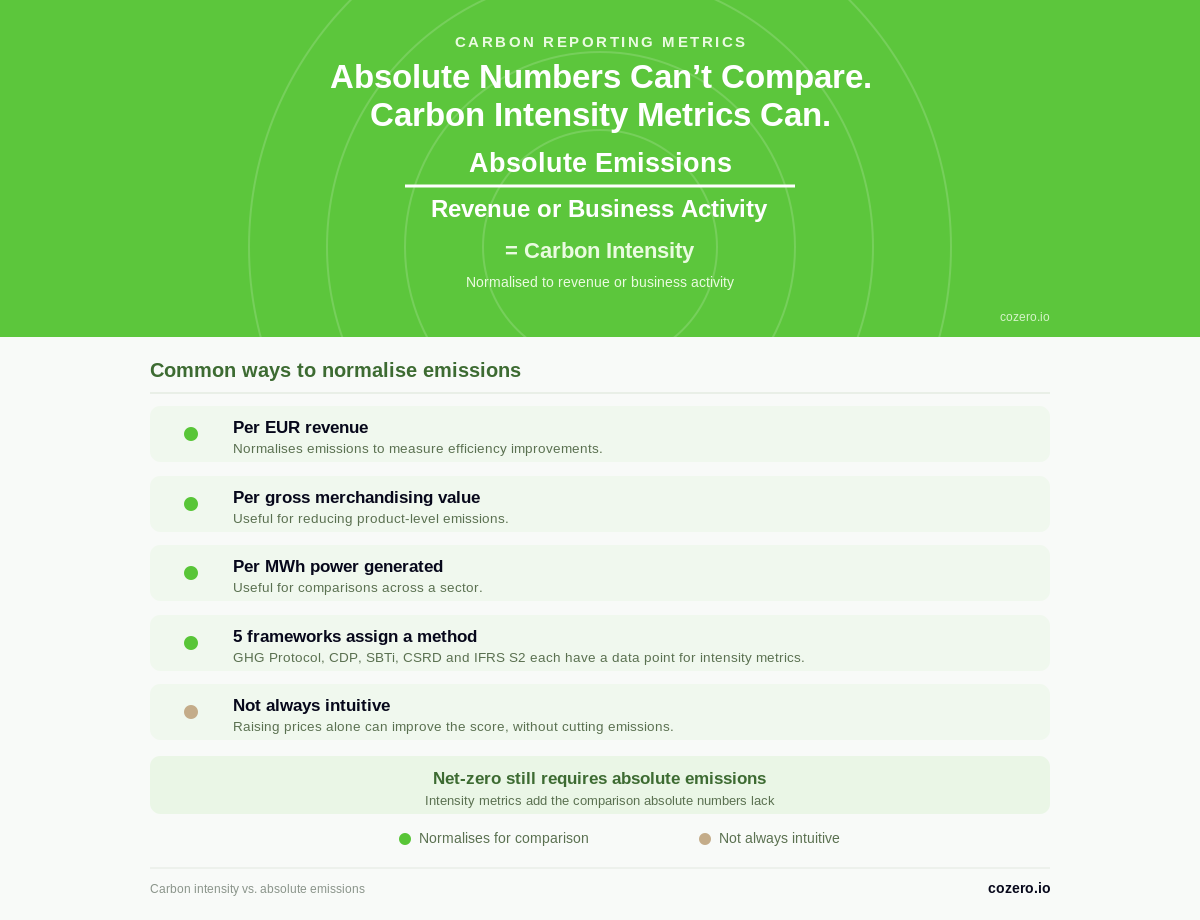
Diesel hits an all-time high in Germany. Decarbonization planning is no longer just a sustainability topic.

Get instant access
Link
Germany's diesel price hit a new all-time high on April 1, 2026, before Easter: 2.327€ per liter and to 2,440€ on Easter Monday. The trigger is geopolitical. The business consequences are not.
Volatility is the new normal
This is not the first oil shock. 2022, 2008, 1979: the pattern is established. Fossil fuel dependency is a financial risk. It always was. Most companies still treat price spikes as external events, outside their control. For those without a decarbonization plan, that's accurate.
A decarbonization roadmap is a risk management tool
Companies that have mapped their Scope 1 and Scope 2 emissions know exactly where their fossil fuel exposure sits: which fleets, which facilities, which contracts. When diesel hits 2.32€, they have levers to pull. Companies without that visibility absorb the cost and wait. That is not a strategy.
"The companies asking us about decarbonization planning right now are not doing it for CDP or CSRD. They're doing it because their P&L is directly exposed to fossil fuel markets. Measurement is the starting point." Patrick Schmitt, Climate Lead, Cozero
The window is not permanently open
Alternatives to fossil fuels: electrified fleets, cleaner logistics partners, energy efficiency investments such as decarbonization in heating generation.While some of the measures only need a contractual one-off decision, others require longer planning. Every quarter without a plan is a quarter of compounding exposure. The companies that started two years ago are not panicking today.
"Carbon data should inform business decisions, not just compliance reports. When energy costs spike like this, that distinction becomes very concrete, very fast." Helen Tacke, CEO, Cozero
The signal is structural
Geopolitical instability disrupting oil supply is an accelerating pattern, not an anomaly. At the same time, the ifo Institute has revised Germany’s economic outlook downward, signaling broader economic pressure beyond energy markets. The question is no longer only whether your business is exposed to fossil fuel volatility.
It is whether you can see that exposure clearly, and whether you have a plan to reduce it.If you can't answer both, today's price is a preview, not a peak.

Related articles
Connecting Carbon Emissions and Financial Statements using IFRS Accounting Standards
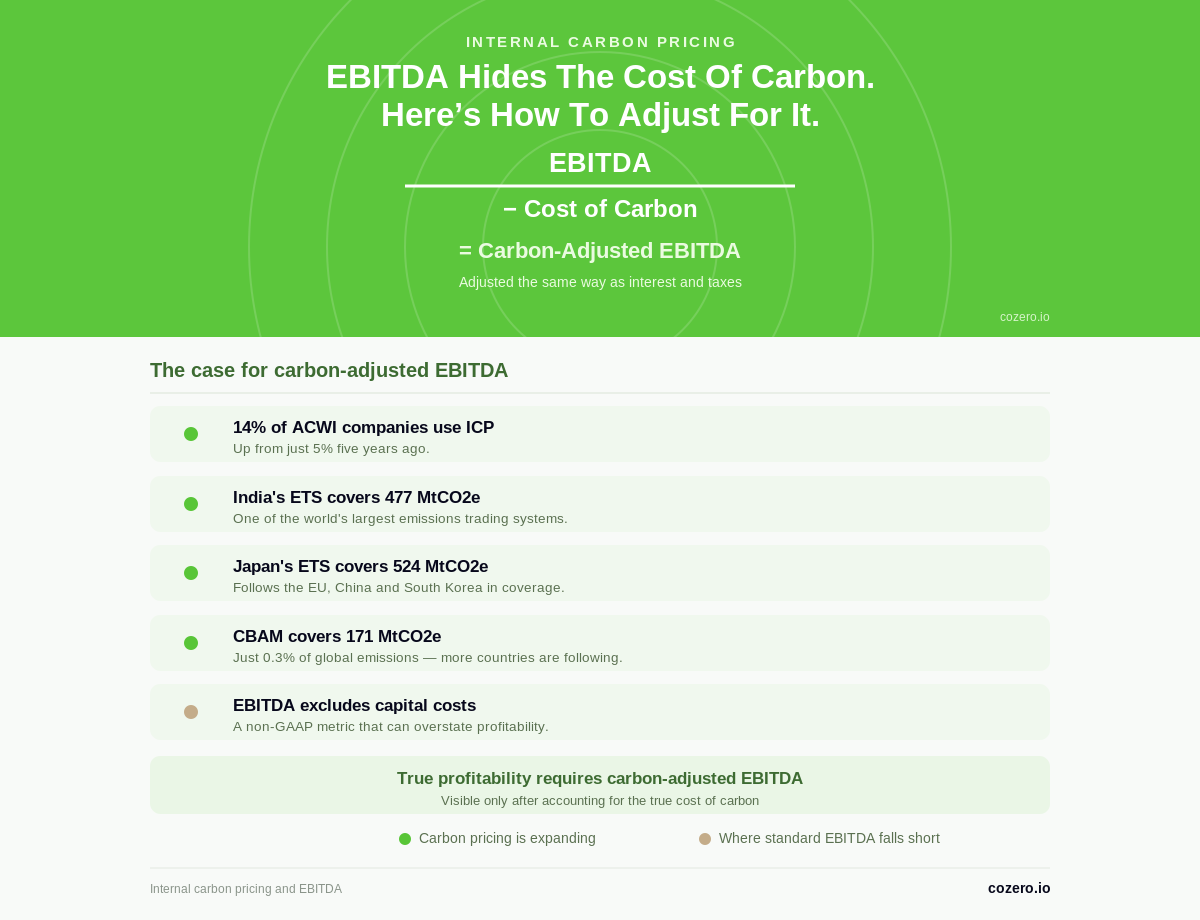
Internal Carbon Pricing: A Practical Path to Carbon-Adjusted EBITDA